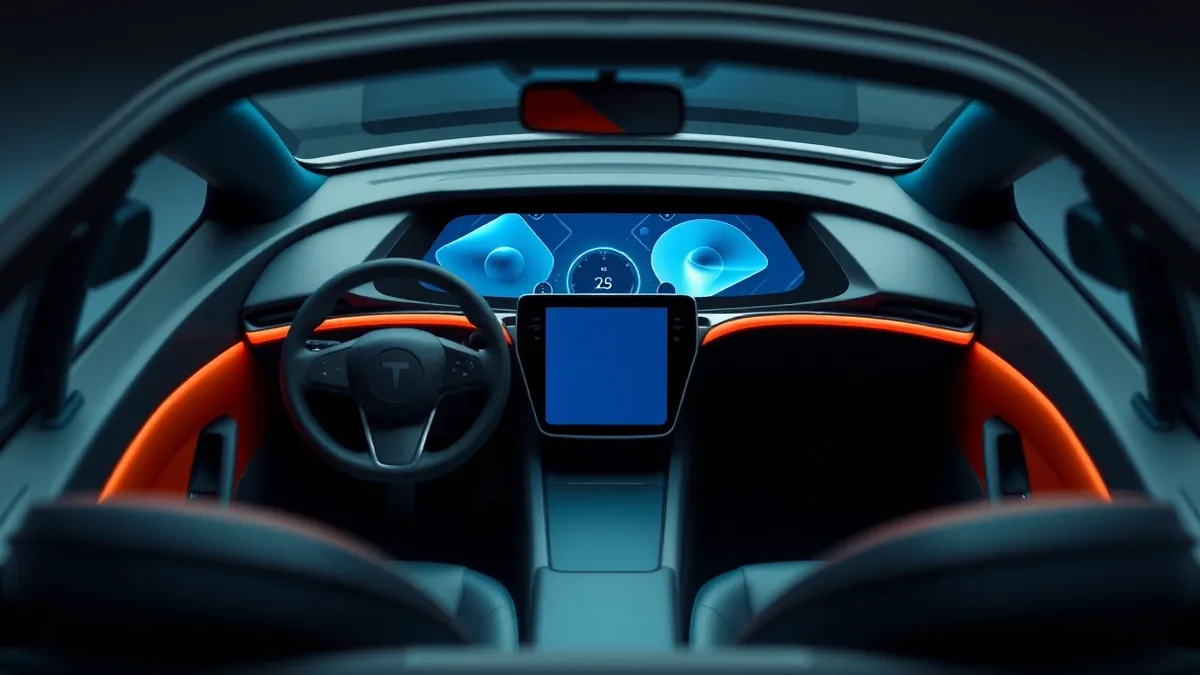
McKinsey published a 2026 analysis projecting significant growth for artificial intelligence within the automotive software and electronics market. The report suggests the share of the market addressable by AI could rise from 59% in 2025 to 78% by 2035.A new report says artificial intelligence will play a much bigger role in car software over the next decade.McKinsey's 2026 analysis projects a substantial increase in the AI-addressable market share for automotive software, driven by SDV adoption.
What was released or claimed
According to the McKinsey analysis, the strongest applications for AI in vehicles will be Advanced Driver Assistance Systems and in-vehicle infotainment.reported Both sectors are projected to reach 95% addressability by 2035. The report cites voice control and personalized user experiences as specific applications within infotainment systems.
Who it affects
The automotive industry is shifting competitive differentiation toward software, making this relevant for manufacturers and technology providers. Software-defined vehicles (SDVs) are becoming more mainstream, affecting how companies design ownership experiences.
What is still unknown
The source material does not specify which companies are leading this transition or provide detailed methodology for the addressability calculations. It is unclear how quickly these projections will materialize in actual vehicle deployments.
So what
As SDVs become common, in-vehicle personalization is evolving from a convenience feature into a defining characteristic. AI enables these vehicles to understand driver behavior and interpret context, moving beyond isolated function automation.
What the paper shows
The research tests the addressable market share for AI in automotive software. according to the published report, ADAS and infotainment will have 95% addressability by 2035.reported A stated limitation is the reliance on projected trends rather than current deployment data.
Why it matters
- Researchers can benchmark current AI capabilities against the 95% addressability target for ADAS and infotainment systems.
- The shift from hardware to software differentiation suggests new opportunities for ML models in vehicle personalization.
- Understanding the move toward connected software ecosystems helps identify integration challenges for multi-system AI orchestration.
- The projection highlights voice control as a key infotainment application, relevant for natural language processing specialists.
Topics: automotive AI, software-defined vehicles, ADAS, market analysis, personalization
Updated
Then / now / next
Vehicle personalization traditionally meant storing basic preferences like seat position and climate settings.
AI enables dynamic learning from driving behavior and context to deliver proactive, personalized experiences.
Watch for the integration of multiple systems into connected software ecosystems that orchestrate navigation and media seamlessly.
Story timeline
- Then Vehicle personalization traditionally meant storing basic preferences like seat position and climate settings.
- Now AI enables dynamic learning from driving behavior and context to deliver proactive, personalized experiences.
- Next Watch for the integration of multiple systems into connected software ecosystems that orchestrate navigation and media seamlessly.
For readers
Researchers
- Focus on models that can interpret context and anticipate user needs in vehicle environments.
- Study integration challenges for orchestrating multiple systems like navigation and climate control.
Developers
- Explore voice control applications for in-vehicle infotainment systems.
- Design algorithms that learn from driving behavior and charging habits.
Business
- Consider how software differentiation impacts competitive positioning in the automotive industry.
Numbers in context
Circle area is proportional to the magnitude; labels retain signs. Figures may describe different measures. Read their contexts above.Ask the article
Local keyword search of this article; no generated answers.Did this article give you the evidence you needed?
Your choice stays on this device. No public tally.Questions readers ask
What percentage of the automotive software market is addressable by AI in 2025?
McKinsey projects the share will be 59% in 2025.
Which automotive sectors have the highest AI addressability by 2035?
Advanced Driver Assistance Systems and in-vehicle infotainment are both projected to reach 95% addressability.
How does AI change vehicle personalization according to the report?
AI enables vehicles to learn dynamically from driving behavior and habits, anticipating needs rather than just responding to commands.
Reading receipt
- McKinsey estimates the AI-addressable share of automotive software will grow from 59% in 2025 to 78% by 2035.
- Advanced Driver Assistance Systems and in-vehicle infotainment are projected to reach 95% addressability by 2035.
- The analysis highlights voice control and personalized user experiences as key infotainment applications.
Still open: How will privacy concerns impact the collection of driver behavior data for personalization?
Still open: What specific technical barriers prevent current systems from reaching 95% addressability?