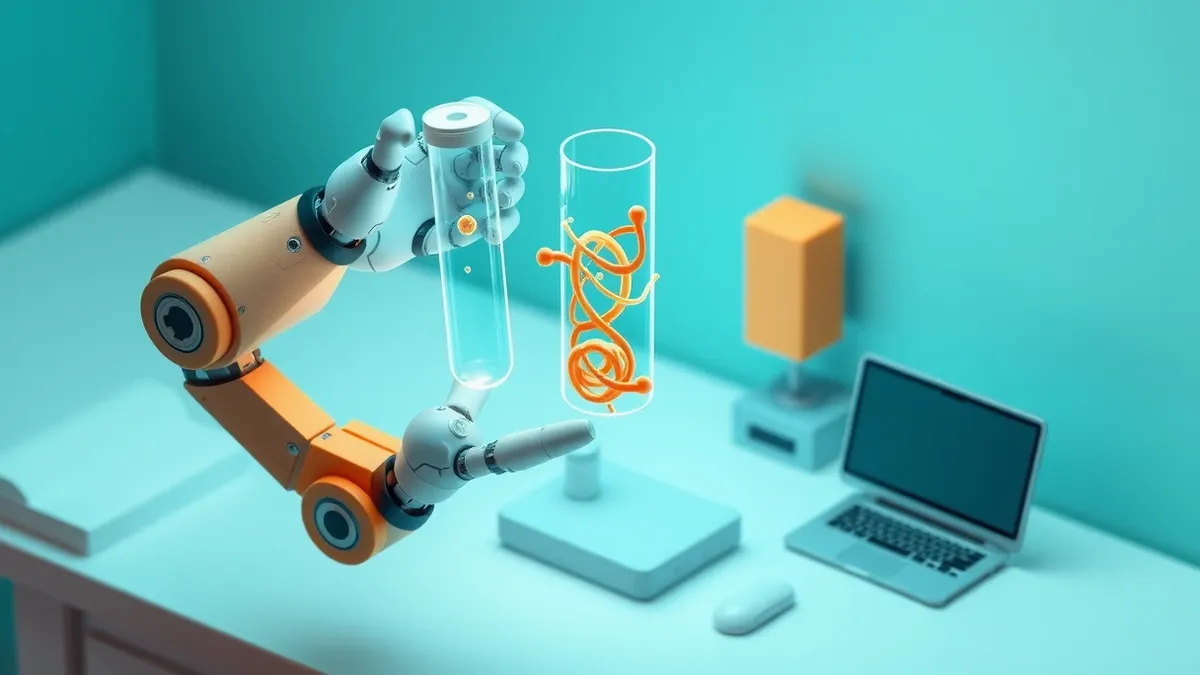
Pharmaceutical industry leaders are pushing back against optimistic timelines suggesting artificial intelligence will cure most diseases within the next decade, according to a report by the Wall Street Journal.reported This skepticism highlights a gap between technological hype and regulatory reality in drug development.Drug companies doubt AI will quickly cure diseases because human biology is hard to model, and no AI-made drug has passed safety checks yet.Industry stakeholders challenge the decadal cure timeline due to biological constraints, underscored by the absence of any FDA-approved AI-designed biologic.
Evidence: reported
Pharmaceutical leaders are skeptical of claims that AI could cure most diseases within a decade; the US FDA has yet to clear any AI-designed biotech drugs (Xavier Martinez/Wall Street Journal)aifleet-techmeme
What was released or claimed
according to the published report, pharmaceutical executives doubt the feasibility of curing most diseases via AI within ten years.reported The outlet noted that the US Food and Drug Administration has not yet cleared any biotech drugs designed by artificial intelligence.
Evidence: reported
Pharmaceutical leaders are skeptical of claims that AI could cure most diseases within a decade; the US FDA has yet to clear any AI-designed biotech drugs (Xavier Martinez/Wall Street Journal)aifleet-techmeme
Who it affects
This dynamic primarily affects pharmaceutical companies and regulatory bodies like the FDA. It also impacts AI researchers working on drug discovery who may face longer validation timelines than predicted by optimistic industry forecasts.
What is still unknown
The material does not specify which specific AI-generated drug candidates are currently in clinical trials. It also does not detail the exact technical failures or biological complexities that have prevented any AI-designed drug from reaching FDA clearance thus far.
So what
The lack of FDA clearance for any AI-designed drug suggests that regulatory hurdles and biological validation remain significant bottlenecks. This implies that near-term commercialization of AI-discovered therapeutics may be slower than some public claims suggest.
What the paper shows
The research landscape for AI in drug discovery currently shows a complete absence of regulatory approval for AI-designed biotech drugs. The reported results indicate that pharmaceutical leaders view biology, not just compute, as the limiting factor.reported The stated limitation is that no AI-designed drug has won FDA clearance, challenging narratives of imminent widespread cures.
Evidence: reported
Pharmaceutical leaders are skeptical of claims that AI could cure most diseases within a decade; the US FDA has yet to clear any AI-designed biotech drugs (Xavier Martinez/Wall Street Journal)aifleet-techmeme
Why it matters
- Researchers should temper expectations about the speed of AI-driven drug approval pipelines given the current zero-clearance record.
- The identification of biology as the main obstacle suggests that wet-lab validation remains a critical, non-automatable step in the workflow.
- Skepticism from pharma leaders indicates that industry adoption of AI for end-to-end drug design may face resistance or require longer timelines.
- The lack of FDA precedent means regulatory pathways for AI-designed molecules are still undefined, creating uncertainty for development teams.
Topics: drug discovery, FDA, AI regulation, biotech, pharma
Updated
The strongest doubt
Counterpoint from the sources
The Wall Street Journal report highlights that biology remains the primary obstacle, suggesting that AI's limitations may be less about algorithmic capability and more about the inherent complexity of human physiology.
For readers
Researchers
- Expect longer timelines for clinical validation of AI-discovered compounds due to biological complexity.
- Focus on wet-lab integration rather than purely computational metrics for drug discovery success.
Investors
- Be cautious of valuations based on rapid cure timelines given the lack of regulatory precedents.
- Monitor early-stage biotech firms for signs of successful FDA engagement with AI-designed candidates.
Policy
- Regulators must develop frameworks for evaluating AI-designed drugs as the first candidates emerge.
- Current zero-clearance status indicates a need for clearer guidance on AI-generated molecular safety.
Ask the article
Local keyword search of this article; no generated answers.Did this article give you the evidence you needed?
Your choice stays on this device. No public tally.Terms in this story
FDA clearance
Regulatory approval from the US Food and Drug Administration allowing a drug to be marketed.
Biotech drugs
Medicinal products derived from biological sources or processes, including those designed with AI.
AI-designed
Refers to drug molecules or therapies whose structure or mechanism was generated or optimized by artificial intelligence algorithms.
Questions readers ask
Has the FDA approved any drug designed by AI?
No, the US FDA has not cleared any biotech drugs designed by artificial intelligence, according to the Wall Street Journal.
Why are pharma leaders skeptical of AI curing diseases soon?
They cite biology as the primary obstacle to achieving such rapid medical breakthroughs within a decade.
What is the current status of AI in drug discovery regulation?
There are currently no FDA-clearance precedents for AI-designed biotech drugs, indicating a regulatory gap.
Connected stories
Reading receipt
- No drug designed by artificial intelligence has received clearance from the US Food and Drug Administration.
- Pharmaceutical leaders express skepticism regarding claims that AI could cure most diseases within ten years.
- Executives identify biology itself as the primary obstacle to rapid AI-driven medical breakthroughs.