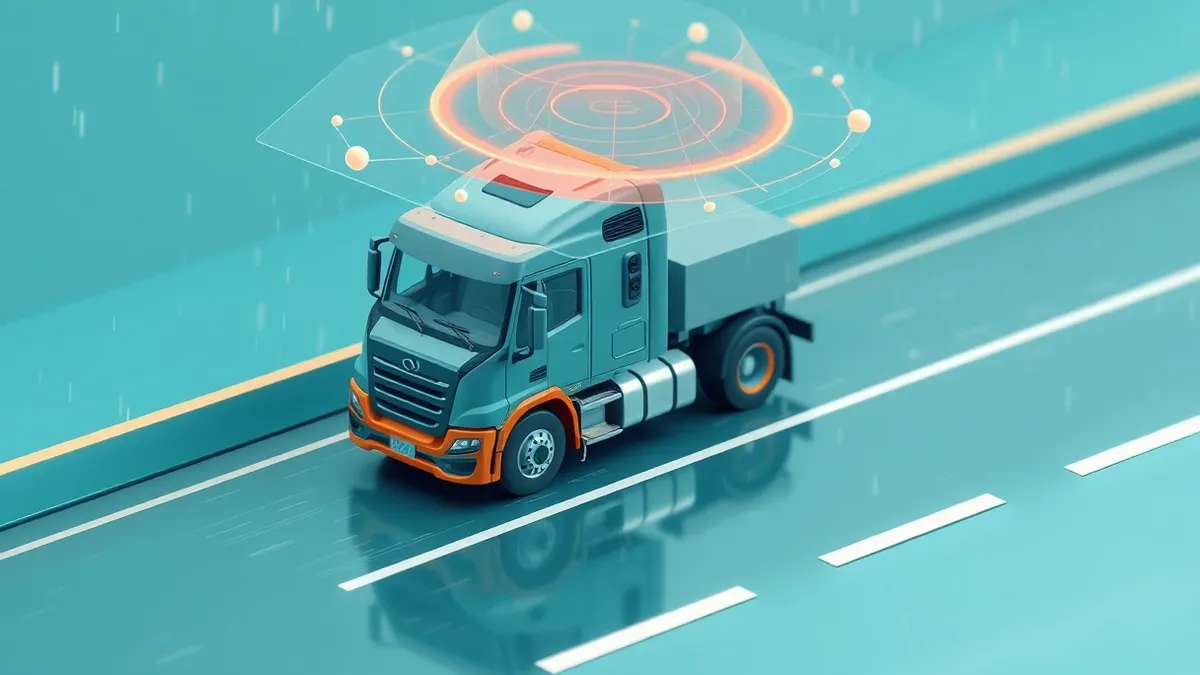
Fast Company reported that Torc employs artificial intelligence to merge data from multiple sensors, generating models that predict how trucks will perform on the road.reported This approach aims to support fully automated vehicles that can navigate interstate highways without human intervention during good weather conditions.Torc uses AI to help trucks drive themselves, but bad weather makes it hard.Torc's multi-sensor fusion models aim to predict truck performance, though environmental variance remains a key failure mode.
What was released or claimed
The outlet stated that simulations of automated fleets indicate potential benefits including improved safety, enhanced fuel economy, and reduced transit times. Torc’s system relies on a combination of machine learning, computer vision, pattern recognition, and adaptive decision-making to operate these vehicles.
Who it affects
The technology impacts truck makers, freight operators, and human drivers. The report notes that automation could ease the ongoing driver shortage by making driving less physically demanding and stressful, potentially improving job satisfaction among those still operating the vehicles.
What is still unknown
It remains unclear how automated trucks will reliably operate in variable weather or under changing roadway conditions. The report also highlights uncertainty regarding whether human drivers should remain inside big rigs during automated operation, noting that major issues still need solving.
So what
Data from modern rigs with automatic emergency braking and lane-keeping assistance suggest fully automated trucks could reduce crash severity. Operators might save costs by optimizing acceleration and braking, while platooning vehicles could lower fuel consumption and emissions from idling.
What the paper shows
The research context here involves testing AI models that combine sensor inputs to predict vehicle behavior. Reported results include simulated improvements in safety and efficiency, but stated limitations explicitly cite difficulties with unpredictable drivers and adverse environmental conditions.reported The material suggests human-machine collaboration will persist for some time.
Why it matters
- ML researchers can study how sensor fusion handles unpredictable external variables like weather
- The gap between simulation benefits and real-world operational constraints highlights data robustness issues
- Human factors engineering remains critical as AI systems integrate with existing driver workflows
- Fuel optimization algorithms may benefit from platooning strategies described in the simulations
Topics: autonomous vehicles, sensor fusion, Torc AI, transportation safety, machine learning
Updated
Then / now / next
Human drivers operated trucks with basic assistance systems like lane-keeping.
Companies test AI-driven models on limited routes in Texas and California.
Researchers must solve variable weather and human-in-the-loop operational challenges.
Story timeline
- Then Human drivers operated trucks with basic assistance systems like lane-keeping.
- 01 Nov 2026 Why driverless trucks won’t be taking over highways just yet
- Now Companies test AI-driven models on limited routes in Texas and California.
- Next Researchers must solve variable weather and human-in-the-loop operational challenges.
The strongest doubt
Counterpoint from the sources
An engineer studying human factors suggests automated trucks and human drivers will likely work together for quite some time, implying full automation is not imminent.
Ask the article
Local keyword search of this article; no generated answers.Did this article give you the evidence you needed?
Your choice stays on this device. No public tally.Questions readers ask
How do Torc's AI models predict truck performance?
They combine data from multiple sensors using machine learning and computer vision to generate predictive models.
What are the main barriers to widespread adoption?
Variable weather, changing roadway conditions, and unpredictable human drivers remain significant challenges.
Can automation reduce crash rates?
Data from assisted vehicles suggest fully automated trucks could reduce the number and severity of crashes.
Connected stories
Reading receipt
- Torc uses AI to fuse multi-sensor data for performance prediction
- Simulations suggest safety and fuel economy gains for automated fleets
- Variable weather and road conditions remain major operational hurdles
Still open: Will human drivers remain inside automated rigs?
Still open: How will systems handle unpredictable human drivers alongside automated ones?